
Courier companies handle more delivery points today than ever before. A single driver may visit dozens of homes, offices, warehouses, and pickup spots in one shift. When this scale grows, even small mistakes cause delays. Missed stops, wrong addresses, and slow updates quickly affect customer trust.
To keep things running smoothly, courier teams rely on location data, smart planning, and courier delivery route management. Courier delivery management app helps drivers stay on track and managers stay informed through delivery monitoring. Let’s walk through how courier companies handle hundreds of delivery points daily without losing control.
Logistics delivery operations are growing quickly across the United States. According to the U.S. Bureau of Labor Statistics, there are over 1.5 million delivery truck drivers and driver sales workers nationwide, and employment in this sector is projected to continue growing through 2032. The steady rise of eCommerce and same-day shipping has increased daily stop volumes, making courier delivery management systems more important than ever. As package demand rises, logistics teams rely on driver tracking, route planning, and real time monitoring to keep deliveries on schedule and reduce delays.
Table of Contents
Why Managing Daily Delivery Points Is Hard?
Handling many delivery locations each day is not simple. It sounds manageable on paper, but real-world delivery work is messy. Traffic changes, customers give unclear addresses, and drivers work under time pressure. It’s one of those things where small issues stack up fast.
Courier teams often deal with multiple delivery zones in a single shift, repeating addresses entered again and again, phone calls between drivers and dispatch, and manual tracking instead of a logistics CRM app.
When locations are not stored properly inside a logistics CRM for deliveries, drivers waste minutes searching. Over a full day, those minutes turn into hours. You know how it goes. A few wrong turns here, a missed gate code there, and suddenly the whole schedule slips.
Common Delivery Challenges Courier Teams Face
Courier operations face similar problems across cities and states. These issues don’t come from poor effort. They come from outdated systems and scattered information. Old methods just can’t keep up with modern delivery volume.
The most common challenges courier companies face daily include drivers managing 50 to 200 stops, addresses entered incorrectly or missing landmarks, no live driver tracking for courier companies, and delays noticed only after delivery fails.
Without real time delivery monitoring, managers stay in the dark. They don’t know where drivers are until someone calls. By then, it’s often too late. It’s frustrating, no doubt about it, especially during peak hours.
How Modern Courier Operations Stay Organized?
Courier companies that scale smoothly rely on structured systems. They stop managing deliveries in silos. Instead, they connect tasks, drivers, and locations in one place using a location based CRM for delivery teams. This keeps daily operations predictable, even on busy days.
Modern courier operations focus on central delivery point storage, task assignment linked to GPS locations, live updates from courier driver tracking apps, and a clear task completion flow.
With a logistics CRM app for courier companies, dispatchers assign tasks once and reuse saved locations every day. Drivers open the app, see their stops, and follow navigation. No guessing. No repeated phone calls. Things move along much faster, plain and simple.
Role of Location Data in Daily Dispatching
Location data is the backbone of courier operations. Every delivery depends on reaching the correct place at the right time. When location data is accurate, everything else improves naturally.
Location data supports delivery route management by saving each delivery point with a GPS pin, reusing locations instead of re-entering them, recording visit times automatically, and guiding drivers with exact navigation paths.
Instead of typing addresses every morning, dispatchers assign saved locations inside a logistics CRM for deliveries. Drivers just tap and go. It saves time, reduces errors, and keeps stress levels lower. It’s one of those changes that feels small but pays off daily.
How Drivers Complete More Stops Per Day?
Drivers are at the center of courier success. When drivers work efficiently, the whole operation improves. Courier companies that use driver tracking and route management software see higher stop completion without pushing staff too hard.
Drivers complete more stops by following pre-planned delivery routes, using navigation linked to each task, updating status with one tap, and avoiding repeat visits due to errors.
A courier driver tracking app removes confusion. Drivers know exactly where to go next. They don’t waste time calling dispatch or checking notes. The day flows better, and drivers finish routes with less fatigue. That’s a win for everyone.
Using Logistics CRM for Driver Tracking
Driver tracking for courier companies is essential when managing many deliveries. Without it, managers rely on guesswork. With it, they see real progress as it happens. This changes how decisions are made during the day.
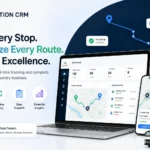
A logistics CRM app for driver tracking provides live driver location on a shared map, automatic visit verification, time-stamped delivery updates, and a full activity history per driver.
Managers can spot delays early and adjust routes if needed. Drivers stay accountable without feeling watched. It’s not about control. It’s about clarity. And clarity keeps courier operations moving.
Route Planning Without Complex Software
Many courier companies avoid route planning tools because they seem complex. In reality, modern delivery route management tools are built for everyday users. You don’t need advanced training to plan efficient routes anymore.
Simple route planning includes grouping delivery points by area, assigning batch tasks as a single trip, reordering stops quickly if needed, and making updates in real time.
Dispatchers create routes in minutes using courier delivery management software. Drivers receive clear instructions instantly. No spreadsheets. No printed lists. It’s quick, practical, and fits real courier workflows.
Proof of Delivery Without Paperwork
Paper-based proof of delivery causes delays and disputes. Forms get lost. Signatures are unclear. Matching paperwork with routes takes extra time. Courier companies now rely on proof of delivery tracking inside logistics CRM systems.
Digital proof of delivery includes GPS-verified check-ins, automatic date and time logs, status updates per delivery, and clear delivery history records.
When a driver reaches a location, the system records it automatically. No extra steps. No scanning forms later. Managers access proof instantly, and customers receive accurate updates.
Manager Visibility Across All Deliveries
Managing dozens of drivers without visibility is stressful. Managers need a clear view of what’s happening across routes, zones, and shifts. Without real time delivery monitoring, planning becomes reactive.
With proper visibility, managers can track completed and pending deliveries, see driver movement live, identify slow routes early, and improve future route planning.
This level of insight helps courier companies reduce delays and improve planning. Managers spend less time chasing updates and more time improving operations.
How Location CRM App Improves Daily Courier Operations?
A location based logistics CRM connects every part of courier work. Tasks, locations, drivers, and reports live in one system. This improves coordination across teams and supports courier delivery management software needs.
Key benefits include:
| Area | Impact |
| Route Planning | Faster daily setup |
| Task Activities | Instant progress updates |
| Delivery Accuracy | Verified & Non Missing |
| Reporting | Clear activity logs |
Courier companies using logistics CRM apps report smoother operations and fewer customer complaints. The system supports growth without adding complexity.
Why Do Courier Companies Switch to Location CRM Solution?
Courier companies don’t switch tools lightly. They switch when current systems slow them down. A logistics CRM app for courier companies solves daily pain points without forcing teams to change how they work.
Courier businesses switch because they get:
- Faster deliveries
- Lower operational costs
- Better driver accountability
- Higher customer satisfaction
When every delivery point is saved, tracked, and verified, operations run better. Drivers feel supported. Managers stay informed. Customers get reliable service.
Final Thoughts on Managing Daily Delivery Points
Handling hundreds of delivery points daily requires structure, visibility, and accurate location data. Courier companies relying on manual logistic tracking struggle to keep pace. Those using logistics CRM for deliveries gain control without added effort.
By using a logistics CRM app for driver tracking and deliveries, courier teams reduce errors, improve delivery route management, and build customer trust. Location CRM is a practical solution for real courier challenges and supports long-term growth.
FAQs
Is route planning complex for courier businesses?
It does not have to be. Modern logistics CRM tools allow batch task assignment and trip grouping. Managers can plan routes quickly without advanced software or manual spreadsheets.
How do managers monitor delivery performance demonstrated daily?
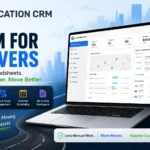
Managers use dashboards showing live driver locations, completed stops, pending tasks, and visit history. This helps them measure performance, balance workloads, and improve future route planning.
How do courier companies manage hundreds of stops daily?
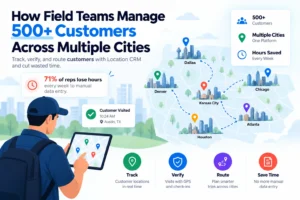
Courier companies rely on saved delivery locations, grouped routes, and driver tracking. Each stop is stored once and reused daily. Dispatchers assign routes digitally, drivers follow GPS navigation, and managers track progress live, which cuts delays and missed deliveries.
What causes delivery delays in courier operations?
Delays often come from unclear addresses, manual route planning, traffic surprises, and lack of real-time driver updates. Without live tracking, managers cannot fix issues early, which leads to missed delivery windows and unhappy customers.
How does a logistics CRM help courier teams?
A logistics CRM app links delivery tasks to GPS locations. Managers assign routes, track drivers live, and monitor completion status. Drivers receive clear navigation and task lists, reducing errors and improving daily delivery speed.